

How to choose the right massage: a complete guide for beginners
If you’re going for a massage for the first time, or maybe after a long time, it’s perfectly normal to be unsure: Which massage should I choose? What is a relaxation massage? What is a deep tissue massage? Is it better to choose a full body massage or focus only on the neck and back?
In the following lines, we have prepared a guide to simplify your choice. You can easily find your way around the types of massages, who they are suitable for, what to remember when booking, and how to know that you have chosen well – whether you are looking for the “best massage Prague” for relaxation or relief from stiffness.
First, clarify your goal: do you just want to switch off or solve a specific problem?
Massage is often perceived as a single service, but in reality, it is a diverse range of techniques and approaches.
You definitely won’t go wrong with your choice when you decide what you need most right now.
The most common goals for beginners:
- Switch off and calm the mind – stress, fatigue, overload.
- Relieve stiffness – neck, shoulder blades, lower back, sedentary job.
- Regenerate after sports – tired muscles, heavy legs.
- Improve mobility – shortened muscles, limited range.
- Enjoy regular care – prevention, long-term tension.
The most common types of massages and when to choose them
Relaxation massage: when you mainly need to relax and relieve stress.
This is the easiest choice for beginners. A smooth, pleasant massage that calms you and releases tension.
Suitable when:
- you are under long-term stress and have trouble sleeping,
- you want a massage “for the feeling” and overall relaxation,
- you are not sure about the intensity and want to start gently.
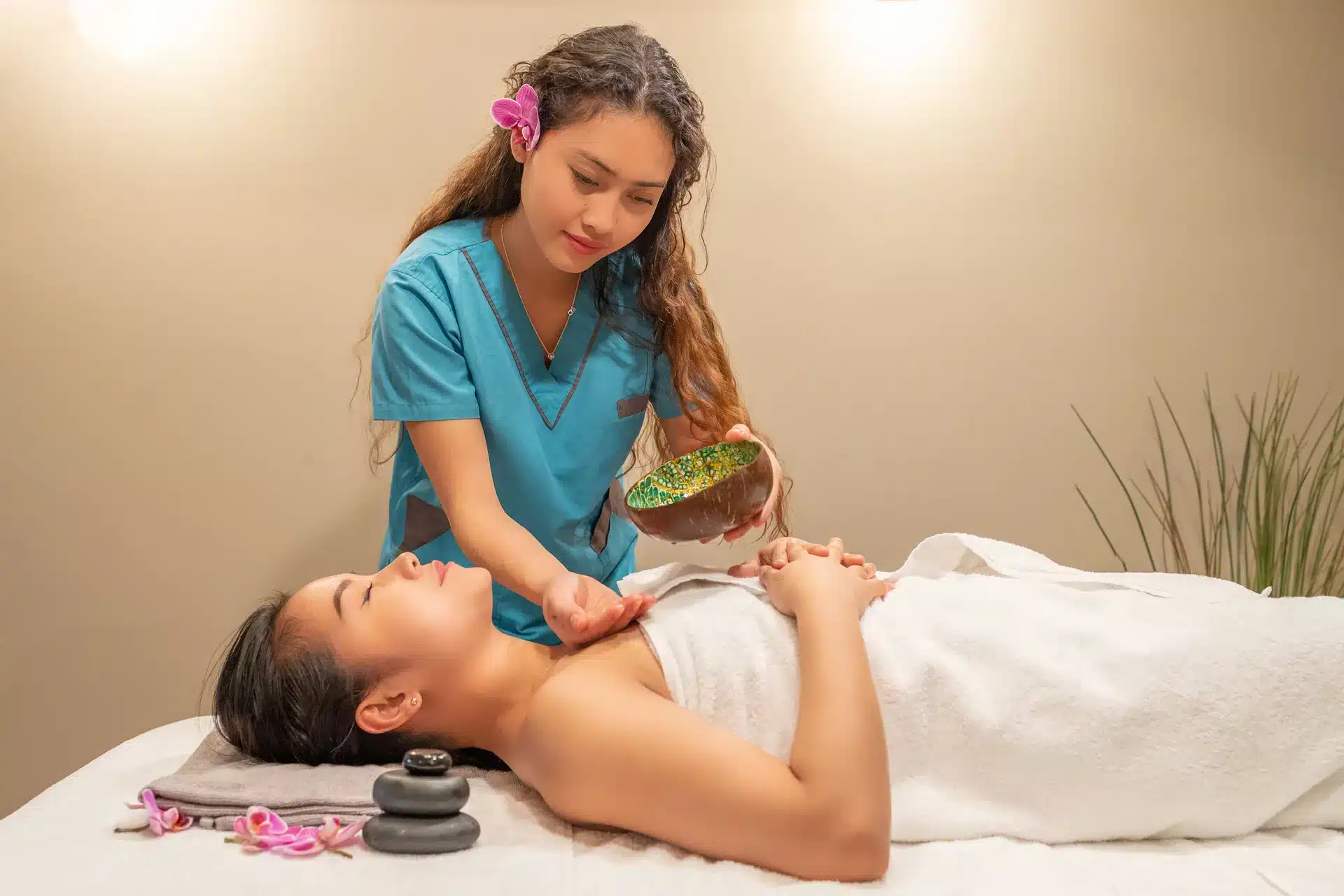
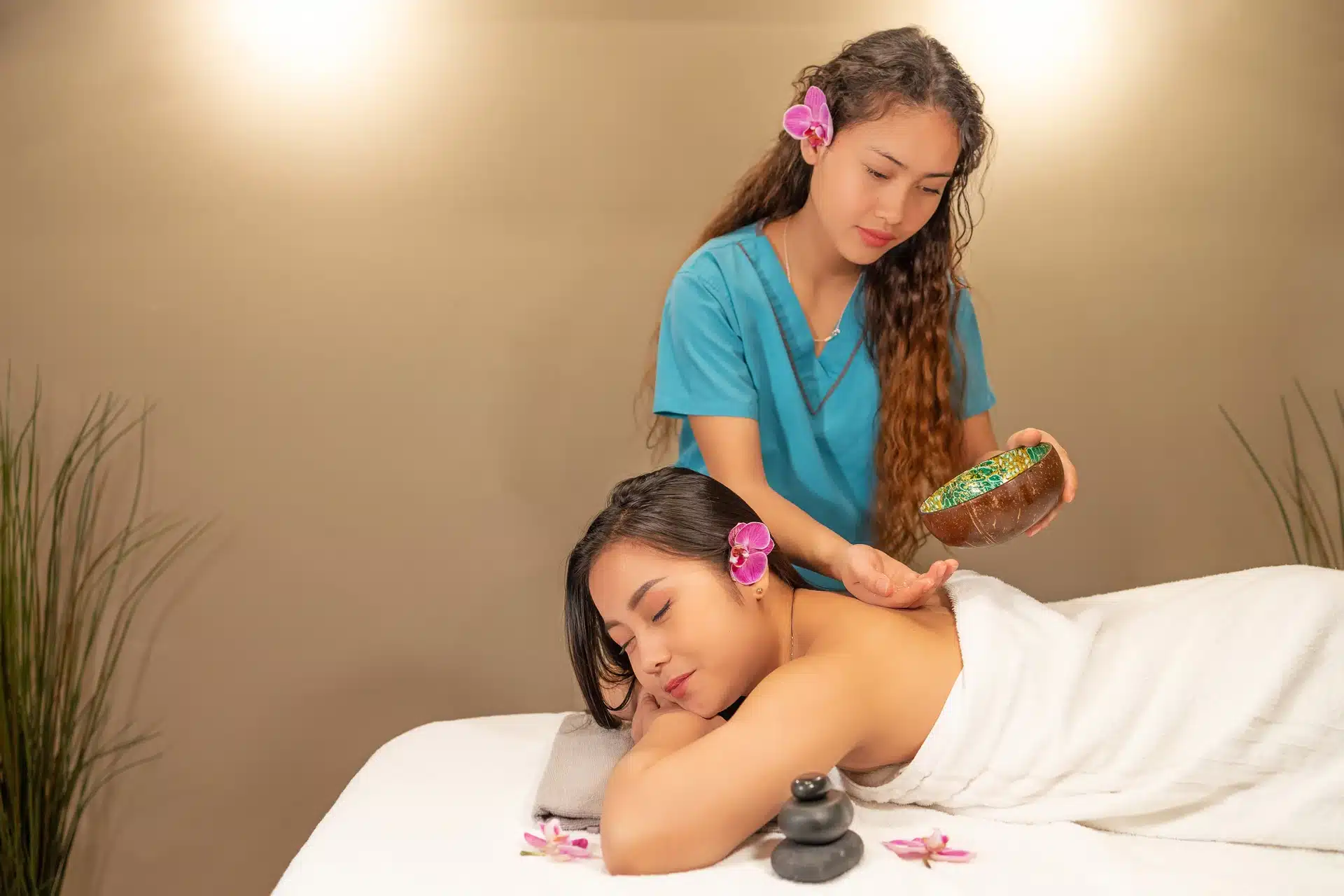
Aroma massage: relaxation and fragrance
Aroma massage is very similar to relaxation massage, only it adds an aromatherapy dimension. People often choose it as a mental reset.
Suitable when:
- you need to calm down and slow down quickly,
- you want a massage that also works on mental fatigue,
- you prefer gentler pressure.
Deep tissue massage: when you want to address stiffness and relief.
Deep tissue massage goes directly to stiff areas. It often works more slowly and precisely, and the result is more significant relief in problem areas.
Suitable when:
- you suffer from repeated neck, shoulder blade, or lower back pain,
- you feel “knots” and chronic tension,
- you want a specific result, not just relaxation
Sports massage: when you have increased physical activity and the body is very overloaded.
Typically aimed at muscle regeneration after exercise. It can be more intense and more functional than relaxation massage.
Suitable when:
- you exercise regularly,
- you have tired legs, back, or even arms after training,
- you want to support regeneration and range of motion.
Thai massage and traditional Asian techniques: when you want stretching, better mobility, or deeper relaxation.
Asian massages combine pressure, work with movement, and targeted techniques. For some, they are the “best massage” because they feel the effect quickly and overall.
Suitable when:
- you are stiff from sitting and want to get moving,
- you want a massage that also works with mobility and stretching,
- you prefer a more active style. The intensity is always based on the client’s agreement and wishes.
Which massage to choose according to what bothers you most often
Neck and trapezius muscles (stress, sitting at the computer):
Most often, a deep tissue massage focusing on the neck and releasing the chest and shoulder blades works best. If you are very exhausted, feel free to start with a relaxation or aroma massage and only then go deep.
Shoulder blades and upper back:
Targeted Filipino massage works great – precision and technique are very important for the shoulder blades.
Lower back and lower body:
A combination of releasing the lower back, gluteal muscles, and hips usually helps. Asian techniques work very well here, thanks to their work with the whole body and its mobility. So choose between traditional Thai and Thai oil massage.
Heavy legs:
Regenerative sports massage or targeted work on the lower limbs during leg massage. If the cause of the difficulties is mainly stress and overload, it helps to indulge in overall relaxation and loosening.
Stress and insomnia:
Often you need to calm the nervous system first and foremost. In such a case, deep work and technique are not so necessary. We want to give the body relaxation, peace, and comfort.
A great helper is head and face massage or royal massage, when special bags with herbs are used.
How to know that you have chosen correctly and when to choose differently next time
The right massage is not one after which you “can’t walk for a week.” The right massage is one after which the body feels better and its effect is noticeable in the following days as well. Sometimes you feel it immediately, other times gradually, especially with long-term stiffness. The key is that you leave with a feeling of relief, not with the feeling that a steamroller has run over you.
Good signs that you have chosen correctly
- the body is more relaxed and movement is easier (the neck turns easier, the shoulders are not so tense at the top),
- you feel pleasant fatigue and calming, not exhaustion,
- you sleep better or wake up lighter the next day,
- the tension does not return immediately after a few hours, but the relief lasts.
Mild sensitivity is perfectly normal after a massage, especially when it went deep. But what we don’t want is sharp pain, worsening of the condition, or the feeling that the massage simply didn’t suit you.
When to choose a gentler massage next time
Sometimes a person chooses too intense a variant when the body needs to be calmed down instead.
Choose a gentler type of massage when:
- you are upset, without energy, or tired after the massage,
- you feel that the pressure was too much and the body is rather contracting the next day,
- you came in great stress and the massage energized you instead of calming you down.
When to choose a more targeted or deeper type instead
If the massage was pleasant, but the problem returns quickly, it is often a sign that the body needs more precise deep work.
Choose a more targeted, deep massage when:
- relaxation was fine, but the pain is back within 24–48 hours,
- you know you have a specific “stiff spot” where the pain recurs,
- you want to address relief functionally and actively.
What to adjust next time, even if the type of massage remains the same
Sometimes it may not be necessary to change the type of massage, but it is enough to fine-tune its instructions to the therapist.
Next time it helps to say:
- “I want to focus more on the neck and shoulder blades / lower back”,
- “please press moderately, without pain”,
- “I’d rather relax than go deep” (or vice versa).
This small clarification often makes a bigger difference than the name of the massage itself.
Why choose a massage at Eden’s Garden
🌿 therapists with experience from the Philippines and Thailand
🌿 combination of relaxation and traditional Asian techniques
🌿 100% natural oils and aromatherapy
🌿 Zen environment and quiet atmosphere
🌿 personalization according to mood, pressure and needs
🌿 possibility to combine with a hammam ritual or a wellness area
🌿 gift vouchers available online
Where to find us
Eden’s Garden branches in Prague:
📍 Štěpánská – Praha 1
📍 Na Poříčí – Praha 1
📍 Vyskočilova – Praha 4
📍 Hotel Grandior – Praha 1
FAQ – frequently asked questions
What massage is best when I go for the first time?
Most often relaxation or aroma. However, if you are bothered by specific stiffness (neck, shoulder blades), a gently guided deep tissue or Filipino massage may be better – with agreed pressure.
Does a deep tissue massage have to hurt?
No. It should be effective and targeted. The intensity is set individually according to tolerance.
How often to go for a massage?
For prevention, usually 1× every 2–4 weeks. In case of great overload, feel free to do it more often for a short time, then switch to maintenance mode.
Photo gallery


Massages
Treat yourself to relaxation with our massages, which we have selected for you based on our experience.

Benefits and FKSP
Payment by Benefits and FKSP? Yes, we can! Do not refuse this great opportunity! And enjoy your relaxation.

Gift Cards
Delight your friends, family, colleagues. Give them a gift voucher on high-quality paper in a luxurious envelope.

Branches
We look forward to you! We are here for you every day in any weather. Enjoy pain-free relaxation.