

Body scrub: why you shouldn’t overdo it and how to care for your skin gently
Body care isn’t just about what you put on after a shower. A big part is also how you look after your skin continuously, whether you give it hydration, protection and also gentle renewal. This is exactly where body scrubbing comes in—the removal of dead skin cells from the skin’s surface.
Exfoliating can be a great step in your body care routine. Afterwards, the skin is usually softer, smoother and better prepared to absorb follow-up care. But this is often where mistakes happen. Many people feel that the more often and intensely they use a scrub, the better the result will be. In reality, however, exfoliating too often or too aggressively can irritate the skin, dry it out, and disrupt its natural protective barrier.
If you want exfoliation to truly benefit your body, it pays to know when it makes sense, how to include it in your body care, and why less is often more.
What is a body scrub and what is it for
A body scrub is a form of exfoliation—the gentle removal of dead cells from the skin’s surface. The goal isn’t to “sand down” the skin, but to help it get rid of residues that can cause a rougher texture, dull appearance, or poorer absorption of body care products.
After a properly performed scrub, the skin is usually:
- softer to the touch,
- smoother and more visually even,
- better prepared for body oil, cream, or butter,
- more pleasant during touch and everyday care.
Body scrubbing is therefore not just a cosmetic detail. It can be a pleasant part of a regular ritual that helps the body feel better and more groomed.
Why you shouldn’t exfoliate too often
This is the most common mistake. When your skin feels soft after a scrub, it’s tempting to repeat it as often as possible. But the skin has its own natural protective layer that protects it from drying out, irritation, and external influences. If you disrupt it with too frequent or harsh exfoliation, it can react in the exact opposite way to what you expect.
Instead of smooth and happy skin, you might experience:
- dryness,
- tightness,
- redness,
- sensitivity,
- flakiness,
- unpleasant irritation after a shower or after applying cream.
Exfoliation only makes sense when it is gentle and appropriate. The skin doesn’t need constant scrubbing. It needs balance.
How often to exfoliate the body
The frequency depends mainly on your skin type and the products you use. For most people, a body scrub once a week is enough, sometimes even less often. If you have sensitive or drier skin, a longer interval might be better.
It’s important to monitor how your skin reacts. When the skin feels pleasant and calm after a scrub and tolerates follow-up care well, the routine is usually set correctly. But if it burns, feels tight, or is red, it’s a signal to slow down.
In general:
- dry and sensitive skin can handle exfoliation less often,
- normal skin can usually handle a gentle scrub once a week,
- rougher skin on elbows, knees, or heels may need more targeted care, but not harsh scrubbing of the whole body.
How to recognize a gentle scrub
Not every scrub is the same for the skin. Some products are gentle and pleasant, others too coarse and unnecessarily aggressive. A gentle scrub shouldn’t sting the skin or leave it feeling “tight” or overly dry.
When choosing and using one, it’s good to remember that pressure isn’t the goal. Exfoliating should be more of a gentle ritual than a forceful sanding of the skin. This is doubly true if you have sensitive, dry, or irritation-prone skin.
It’s also worth not using it on the body:
- immediately after shaving, when the skin is more sensitive,
- on irritated, injured, or red skin,
- at a time when the skin is extremely dry or damaged,
- with very hot water and strong friction at the same time.
Why hydration is important after exfoliating
A body scrub should never end with the scrub itself. After removing dead cells, it’s important to soothe the skin and provide it with hydration and nourishment. That’s when it’s best prepared to absorb body cream, oil, or butter.
Post-exfoliation hydration helps to:
- soothe the skin,
- support its softness,
- prevent tightness and dryness,
- maintain a feeling of comfort for longer.
In other words: exfoliating without follow-up care is only half the job. If you want your skin to stay pleasant and not just briefly smooth, hydration is essential.
How to include a scrub in your body care
It’s best to see a scrub as a supplement to body care, not its main pillar. The foundation is consistency, gentle washing, hydration, and an overall gentle approach. A scrub can then support skin smoothness and a pleasant body feeling once in a while.
It works well, for example, when:
- you want to prepare the skin for more intense hydration,
- you feel that your body is rougher to the touch or dull,
- you want to treat yourself to a home wellness ritual,
- you care for your skin regularly, not just occasionally.
That’s the difference between functional care and over-trying. The body usually doesn’t need more steps. It needs the right steps.
When care is gentle, it tends to be more effective
In body care, more doesn’t always mean better. Body scrubbing has its place, but only when used with respect for the skin. Instead of scrubbing too often, it’s better to bet on consistency, gentleness, and subsequent hydration.
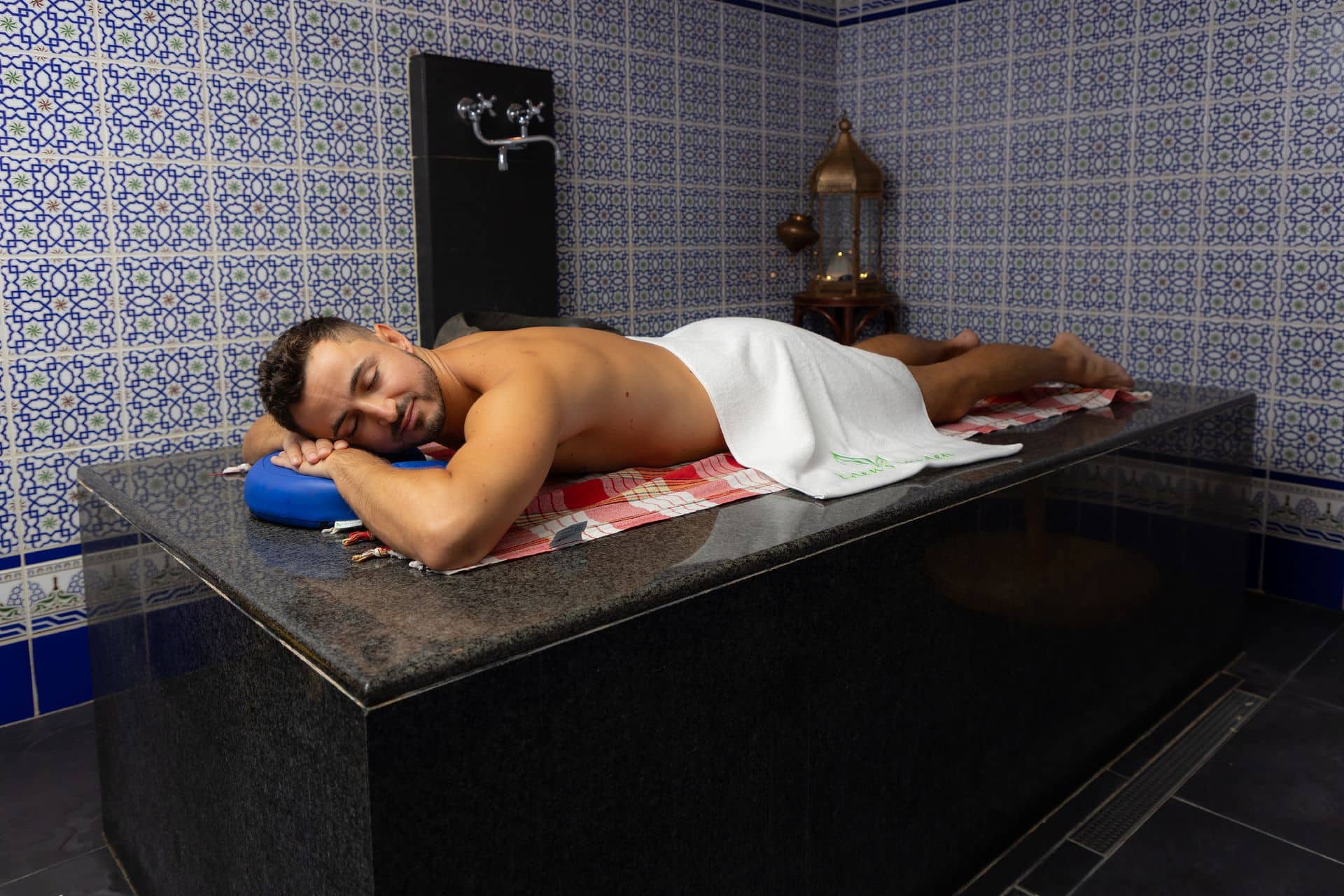
If you want to treat yourself to a moment of regeneration and body care beyond home rituals, we have a professional Hammam ritual for you. Body care isn’t just about individual steps, but about the overall feeling of being comfortable in your own skin.
FAQ – frequently asked questions
How often should you exfoliate your body?
For most people, a body scrub once a week or even less often is enough. It depends on your skin type and how it reacts. Sensitive and drier skin usually needs a longer interval.
Can body scrubbing dry out the skin?
Yes, if it’s too frequent or aggressive. That’s why it’s important to choose a gentle scrub and always hydrate the skin afterwards.
Is a scrub suitable for sensitive skin?
Yes, but carefully. Sensitive skin can handle gentler products and less frequent use. If the skin is irritated or red, it’s better to skip the scrub.
What should you put on your body after a scrub?
A body cream, butter, or oil is ideal to soothe the skin and provide hydration. The skin is usually well-prepared for follow-up care right after exfoliating.
When is it better not to exfoliate the body?
It’s better to skip a scrub if there’s irritation, redness, skin injury, sunburn, or when the skin is hypersensitive and reacts with a burning sensation.
Photo gallery









Massages
Treat yourself to relaxation with our massages, which we have selected for you based on our experience.

Benefits and FKSP
Payment by Benefits and FKSP? Yes, we can! Do not refuse this great opportunity! And enjoy your relaxation.

Gift Cards
Delight your friends, family, colleagues. Give them a gift voucher on high-quality paper in a luxurious envelope.

Branches
We look forward to you! We are here for you every day in any weather. Enjoy pain-free relaxation.